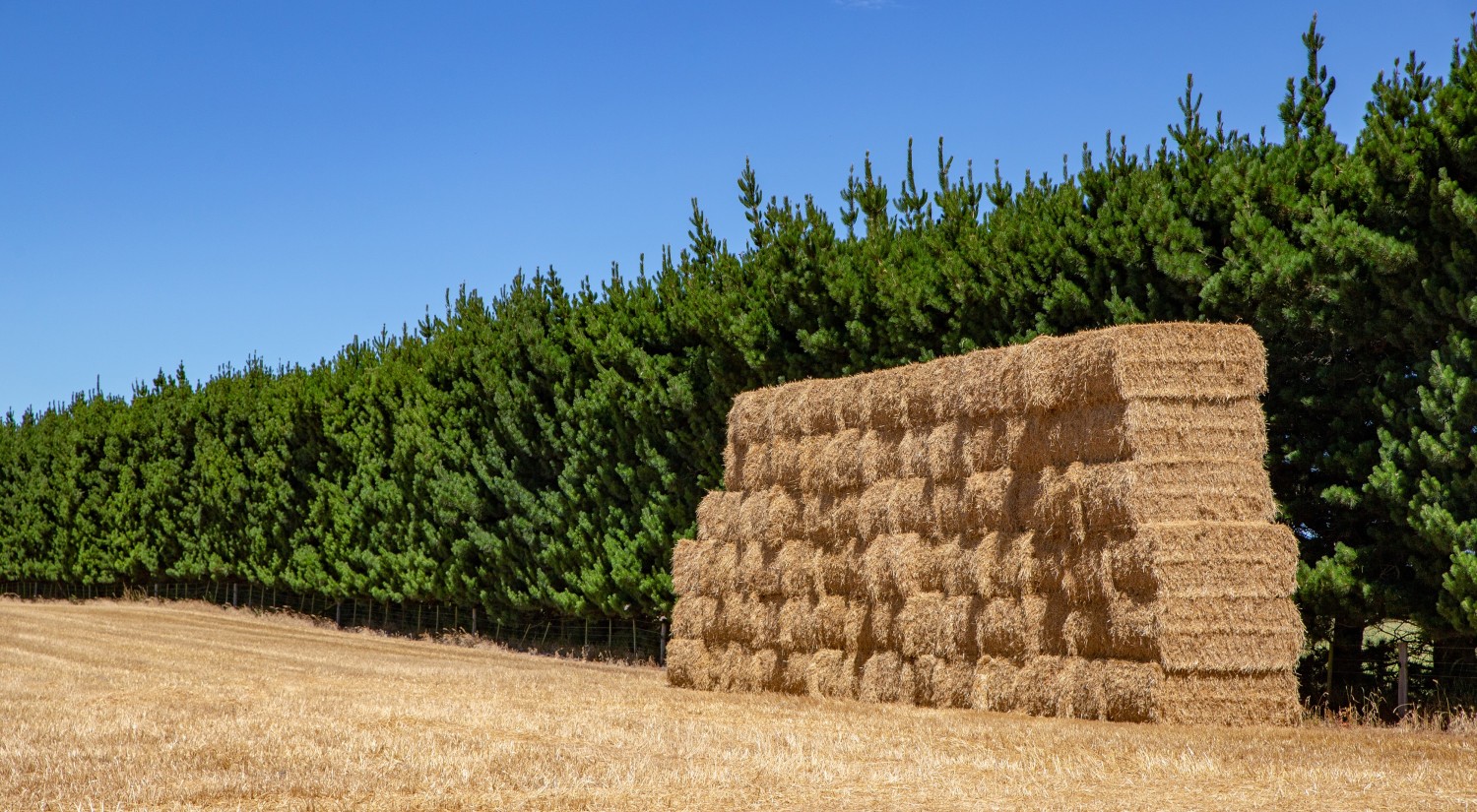
Wise Move transports baled feed and bedding across New Zealand, from conventional bales of meadow hay for a local equestrian yard to truck-and-trailer loads of straw or baleage for a dairy support block. We collect from paddock stacks, hay sheds and feed merchants, and coordinate delivery with the farmer or contractor receiving the load.
Conventional bales, medium squares and big rounds. The bale format determines how much deck space a load needs and how it can be handled at each end. For square bales, we use the length, width and height. For rounds, we need the diameter and width. If a feed order is described in conventional bale equivalents, we confirm the number and size of the physical bales being collected so the right truck turns up.
Deck space and payload. Two stacks with the same bale count can be very different loads. Dry straw can fill the available deck space before the truck reaches its payload, while wrapped baleage of a similar size can be considerably heavier. For baleage sold by the kilogram of dry matter, the useful figure for transport is the actual weight of each bale, including moisture. Bale dimensions, weight and quantity together determine whether the consignment suits a single truck, a truck-and-trailer unit or several trips.
Dry hay and straw cartage. Meadow hay, lucerne hay and cereal straw need weather protection between the stack and the shed. For exposed loads, we agree on cover for the journey and coordinate unloading with the receiving farm. During haymaking, that can mean collecting from the paddock once baling is complete and delivering while the loader operator is still on site.
Wrapped baleage handling. Individually wrapped silage bales need a different handling setup from dry hay. A loader or telehandler fitted with a wrapped-bale grab, often called soft hands, can lift the bale without piercing the film. Before booking the run, we confirm that suitable handling equipment will be available at both farms and that the delivery area is ready to receive the bales.
Paddock access and feed shed delivery. The best loading point may be the farm entrance or a metalled yard, particularly if a paddock has softened after rain. We check gate width, tight turns, farm tracks and turning space for the truck and trailer. At delivery, we agree whether the bales will be unloaded beside the shed, stacked under cover or dropped at a separate feed-out area.
Harvest collections and winter feed runs. We arrange one-off pickups, transfers between a milking platform and support block, and staged deliveries from growers or feed merchants. For a split load, we confirm the bale type and quantity for each farm before loading. This lets the driver plan the drop order and gives each receiving farm a delivery window for its loader.
A hay delivery often involves a grower at one end and a farmer with a tractor and loader at the other. We confirm the collection time, the correct farm entrance and who will meet the truck. If weather or paddock conditions change the plan, we keep both ends of the job informed.
Read our customer reviews for first-hand feedback on punctuality, communication and care during delivery. Customers have also left over 8,526 reviews of Wise Move on Google.
Enter the pickup and delivery locations, your preferred date and what needs to move. Specify whether the load is hay, straw or wrapped baleage, then give the bale count, format, approximate dimensions and weight. If the consignment includes different bale types, list the quantity of each.
Tell us where the bales will be collected and who will load the truck. A map pin for the paddock gate is useful when the loading point is away from the farmhouse or the property has several entrances. Include photos if the driver needs to negotiate a narrow gateway, a sharp turn or a tight shed approach.
At the receiving farm, confirm who will unload, what equipment is available and where the bales need to go. If the truck is collecting straight after baling, include the contractor’s contact details and the expected time the stack will be ready.
Hay transport is priced around the route, the deck space and payload required, and the time needed at each farm. A shed-to-shed delivery with loaders ready at both ends is a different job from collecting several paddock stacks and unloading at two properties.
If the grower will load the truck and the receiving farm will unload it, the booking can cover cartage alone. If you need a loader brought to site, bales stacked in the shed or additional drops along the route, include those details so the full job can be priced before collection.
For a part load with flexible dates, an available backload on the same route may reduce the cartage cost. Your confirmed price includes fuel and GST and identifies the bale quantity, delivery points and handling agreed for the run.
Hay transport services across New Zealand.