Wise Move transports portable and relocatable buildings across New Zealand. For builders and hire companies, that can mean delivering a new site office from the yard, moving a smoko room or ablution block to the next civil works project, or collecting a hire unit when a job finishes. Cabin and tiny home relocations range from moving a sleepout between properties to delivering a factory-built home onto prepared foundations.
Building dimensions and transport weight. A floor plan tells us the footprint. To plan the move, we need the widest, longest and highest points of the building as it will travel. Roof eaves, gutters, external heat pump units and attached porches can extend beyond the walls. The height of the trailer deck also contributes to the overall travelling height. For a fitted-out cabin or modular unit, the manufacturer’s dimensions and transport weight help us select the vehicle and check clearances along the route.
Cabins on skids and tiny homes on wheels. A skid-mounted cabin may suit a tilt trailer if the base is designed for that loading method and there is room to line up at both sites. A portable office with designated lifting points may be better suited to a flat-deck truck and HIAB. For a tiny home on wheels, we check the chassis, dimensions and loaded weight to establish whether it can legally travel on its own trailer or needs to be carried on a transporter.
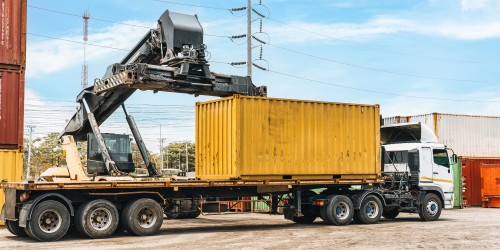
HIAB delivery and mobile crane placement. Building weight is only part of the lift. The distance from the crane to the final position also matters. A truck may be able to park beside a site office at collection but need to reach over a fence or past an existing building at delivery. We use the site layout and the manufacturer’s lifting information to establish whether a HIAB can make both lifts or whether a separate mobile crane is needed at one end.
Rural access and construction sites. A wide gateway can still lead into a turn that a long trailer cannot make. We check the approach from the road, gateposts, driveway gradients, tight bends and overhead lines, as well as the space available for the truck and crane to set up. On an active construction site, we coordinate the delivery entrance and unloading window with the site manager so the transporter can reach the agreed position.
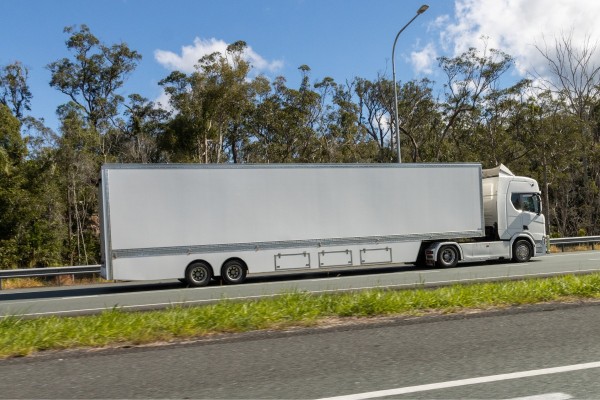
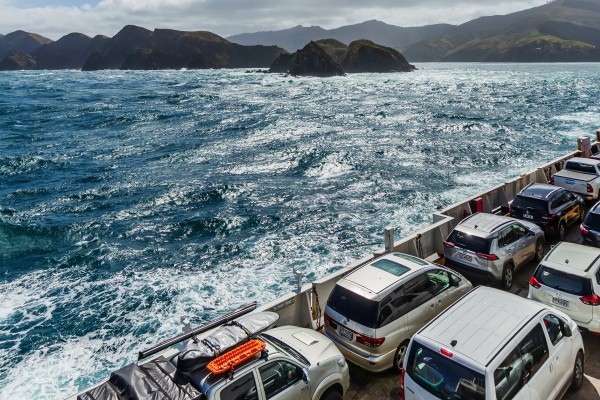
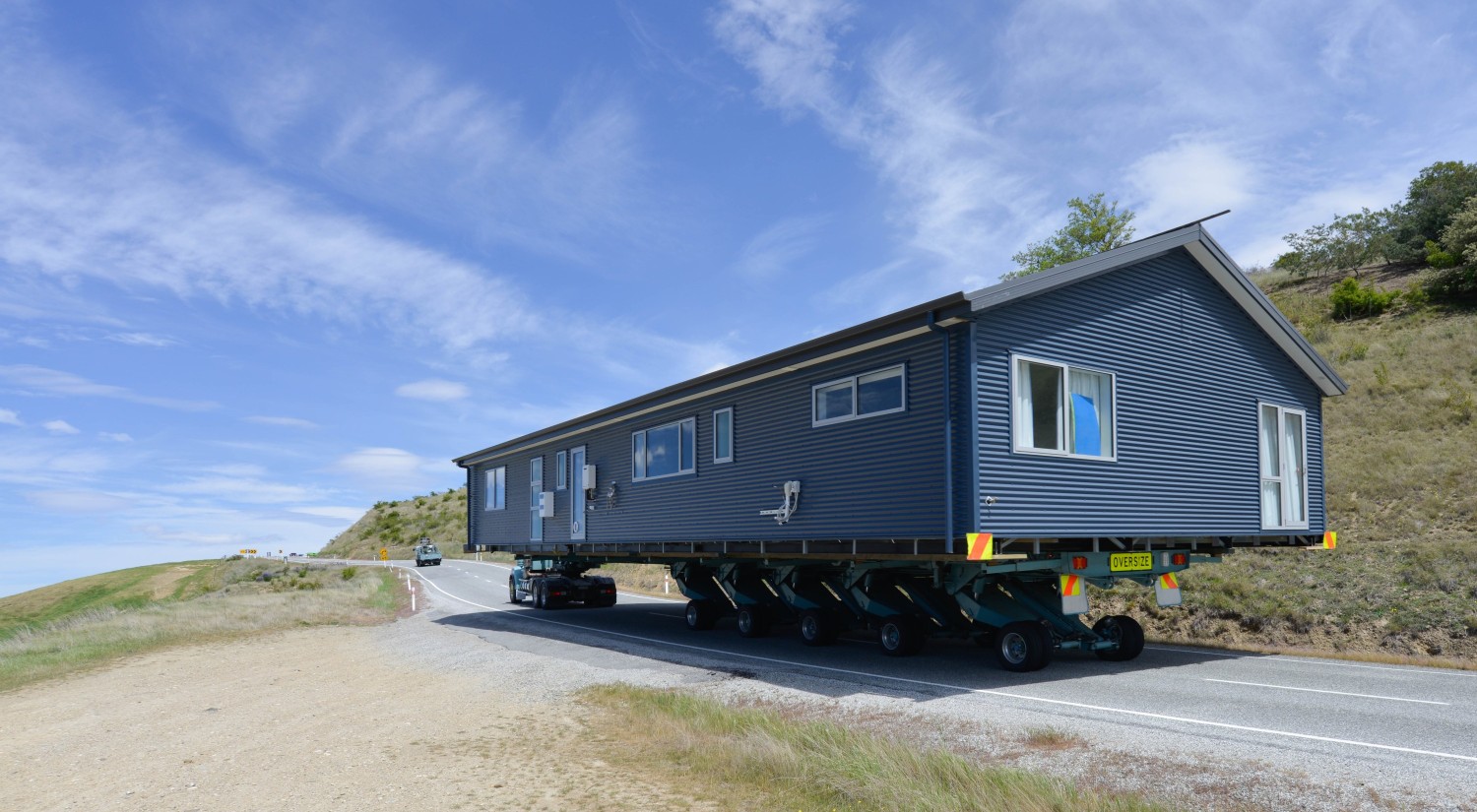
Overdimension and inter-island transport. For a wide or high load, the transport operator assesses the complete vehicle and building combination against NZTA requirements. The dimensions and proposed route determine whether an overdimension permit, load pilots or particular travel times apply. For a North Island to South Island relocation, the Cook Strait freight crossing must also be confirmed for the loaded vehicle before the collection and delivery dates can be finalised.
Modular building delivery and final placement. Where a building travels in sections, we plan the truck arrivals around the order in which the crane and installation crew need each module. Before dispatch, we confirm the module identification, the position of the prepared supports or foundations, and which way the doors and service connections must face. This matters on confined sites where there is room to lift directly from the truck but little space to put a module down and reposition it later.
When a crane and installation crew are booked for a building delivery, they need to know when the transporter will arrive. We agree on a delivery window with the site contact and communicate timing changes so the builder, driver and lifting crew can coordinate the unloading.
Read our customer reviews for first-hand feedback on collection times, communication and care during delivery. Customers have also left over 8,526 reviews of Wise Move on Google.
Enter the collection and delivery addresses, your preferred date and the type of building. Include its overall length, width, height and weight, and tell us whether it sits on skids, foundations or a trailer chassis. If the manufacturer has supplied a specification sheet or lifting drawing, attach it to the booking.
Photos of the building, its base, the entrance from the road and the final set-down area help us assess both ends of the move. For a second-hand cabin or site office, confirm when the building will be disconnected from services and released from its fixings, and whether any steps, decks or awnings will be removed before collection.
For a factory pickup, provide the builder’s dispatch contact and the date the unit will be ready to load. For delivery to a worksite, include the site manager’s details, gate access times and any booked crane window. If several modules are travelling, identify each one and give the required delivery order.
The cost depends on the building dimensions and weight, the route and the equipment required at each site. A site office that can be loaded and placed alongside a HIAB truck is priced differently from a modular building that needs a flat-deck transporter, pilot vehicles and a mobile crane at the destination.
Tell us what equipment is already booked. If the manufacturer will load the building and your site crane will unload it, the booking can cover the transport leg alone. If you need collection and final placement, the price can include the lifts at both ends.
Your fixed price includes fuel and GST. Where the agreed move requires cranage, load pilots, permit fees or a Cook Strait freight crossing, the booking sets out which costs are included before you confirm.
Portable building transport services across New Zealand.